
Techniques for Incorporating Flexible Polymers in Next-Gen Smartphones
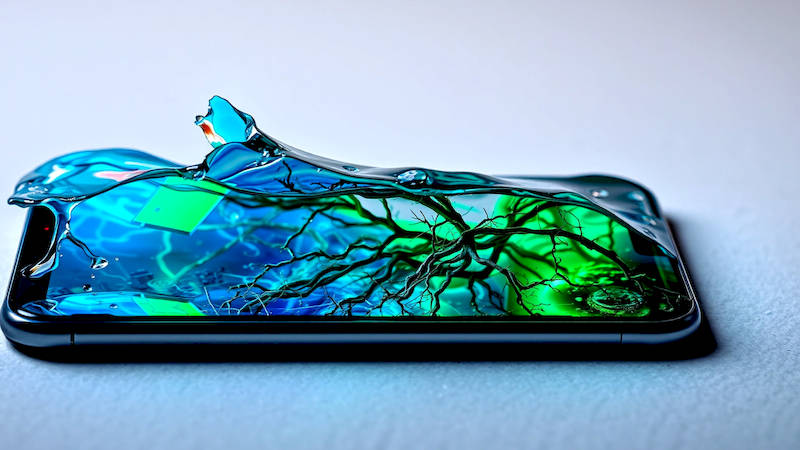
The smartphone industry, once defined by incremental upgrades, is on the cusp of a radical transformation. For over a decade, the rectangular glass slab has dominated, but consumer interest in truly innovative form factors – foldable, rollable, and bendable devices – is growing. Driving this shift is a relentless pursuit of flexible and durable materials, with flexible polymers taking center stage. These materials aren’t simply about aesthetics; they're fundamental to enabling entirely new functionalities and user experiences. From dramatically improved shock resistance and thinner profiles to the possibility of self-healing screens, the integration of flexible polymers promises to redefine what a smartphone can be.
The limitations of traditional rigid materials like glass and metal have become apparent as manufacturers push the boundaries of design. Concerns around fragility, weight, and the challenges of creating complex curves have spurred the search for alternatives. The benefits are not merely cosmetic, either. Flexible polymers can also reduce manufacturing complexity and potentially lower production costs, opening doors to more accessible and diverse smartphone offerings. This article examines the core techniques being employed to incorporate these groundbreaking materials, the hurdles facing their widespread adoption, and what the future of smartphone design might hold.
- Understanding the Landscape of Flexible Polymers
- Techniques for Polymer Substrate Fabrication
- Integrating Flexible Displays: OLED on Polymer
- Addressing Connector and Circuitry Challenges
- Strategies for Enhanced Durability and Protection
- The Future: Rollable, Stretchable, and Beyond
- Conclusion: A Flexible Road Ahead
Understanding the Landscape of Flexible Polymers
Flexible polymers aren't a monolithic group; rather, a diverse range of materials with varying properties tailored for specific applications within a smartphone. Polyimide (PI), polyethylene terephthalate (PET), and thermoplastic polyurethane (TPU) are just a few examples commonly being explored. PI, known for its exceptional heat resistance and mechanical strength, is frequently used as a substrate layer, forming the foundation upon which other components are built. PET, a more cost-effective option, excels in clarity and is often found in display layers. TPU, exhibiting high elasticity and abrasion resistance, is employed in protective coatings and potentially for more flexible housing. The key to success lies in selecting the right polymer, or more commonly a combination of polymers, for each specific component.
Furthermore, the inherent properties of these polymers are often modified through various techniques like blending, cross-linking, and surface treatments. Blending polymers allows manufacturers to fine-tune characteristics like flexibility, toughness, and transparency. Cross-linking, achieved through chemical bonding, enhances thermal stability and solvent resistance. Surface treatments, such as plasma etching, can improve adhesion with other materials, crucial for layering within a device. Finally, it's important to note that 'flexible' isn’t synonymous with ‘unstructured.’ These polymers, even in their pliable state, require precise structural control to maintain functionality and prevent unwanted deformation.
Recent advancements point towards the development of new polymer compositions with even more impressive characteristics. Companies like DuPont are continually innovating in the PI space, creating thinner, more flexible, and higher-performing materials. This continuous improvement in material science is critical for realizing the ambitious visions of truly foldable and rollable devices. According to a report by Transparency Market Research, the global flexible polymer market is projected to reach $75.2 billion by 2030, fueled by increased demand from the consumer electronics sector.
Techniques for Polymer Substrate Fabrication
The foundation of any flexible smartphone is its substrate: the underlying layer that supports all other components. Traditional glass substrates are simply incompatible with significant bending, necessitating a shift to polymer-based alternatives. Several fabrication techniques are employed to create these flexible substrates, each offering its own advantages and drawbacks. Solvent casting is a relatively simple and cost-effective method where the polymer is dissolved in a solvent, cast onto a surface, and then the solvent is evaporated, leaving behind a thin, flexible film. However, solvent residue and potential structural defects can be challenges.
Another dominant method is roll-to-roll (R2R) processing, a high-throughput technique ideal for mass production. In R2R, the polymer material is continuously coated onto a moving substrate, enabling rapid and cost-efficient fabrication. This process is frequently utilized for manufacturing flexible displays and touch sensors. However, achieving precise control over coatings and maintaining consistent quality across large areas requires sophisticated equipment and stringent process control. More recently, advanced technologies like 3D printing and nanoimprint lithography are being investigated for creating complex polymer structures with enhanced functionality. These, while currently more expensive, offer the potential for customized designs and incorporation of intricate features.
Crucially, after fabrication, these polymer substrates often undergo extensive quality control, including testing for tensile strength, flexibility, and optical clarity. Defects, even microscopic ones, can compromise performance and reliability, necessitating rigorous inspection and quality assurance measures.
Integrating Flexible Displays: OLED on Polymer
Flexible displays are arguably the most visible aspect of the next-generation smartphone revolution. Currently, Organic Light-Emitting Diode (OLED) technology reigns supreme in this field due to its inherent flexibility and self-emissive properties (meaning they don’t require a backlight). However, simply transferring OLED technology onto a flexible polymer substrate isn't straightforward. One major challenge lies in the differing thermal expansion coefficients (TECs) between the polymer substrate and the OLED materials. When temperature changes occur, the polymer and OLED layers expand or contract at different rates, leading to stress and potential cracking.
To mitigate this, manufacturers employ techniques like using a ‘buffer layer’ with a TEC that falls in between the polymer and OLED materials. This buffer layer acts as a stress absorber, helping to distribute the thermal stresses evenly. Another technique involves Thin-Film Encapsulation (TFE), a multi-layered barrier that protects the OLED materials from moisture and oxygen, crucial for long-term durability. Furthermore, meticulous control over the deposition processes and careful material selection are paramount. Companies like Samsung Display have demonstrated remarkable progress in this area, successfully launching foldable smartphones with durable and vibrant flexible OLED displays. “The key wasn’t just creating a flexible OLED panel. It was ensuring that the entire stack, from the substrate to the protective layers, could withstand repeated bending and stress,” noted Dr. Choi, a lead materials scientist at Samsung Display, during a recent industry conference.
Addressing Connector and Circuitry Challenges
Simply having a flexible display and substrate isn't enough; the internal circuitry and connections also need to adapt. Traditional rigid printed circuit boards (PCBs) are incompatible with bending, potentially leading to broken connections. Here, flexible printed circuits (FPCs) become the solution. FPCs utilize flexible polymer substrates, typically PI, onto which conductive traces are etched or deposited. These circuits can then be directly bonded to the display and other components. However, transitioning from rigid PCBs to FPCs introduces new challenges.
Maintaining signal integrity in bent configurations is critical. Bending can alter the impedance of the signal traces, leading to signal loss or reflections. To address this, circuit designers carefully route traces to minimize bending stress and employ techniques like differential signaling to improve noise immunity. Furthermore, interconnect technology is crucial. Traditional solder joints can become brittle under stress. Replacing them with anisotropic conductive films (ACFs) or conductive adhesives provides more robust and reliable connections that can withstand repeated bending. Another emerging technique involves stretchable interconnects, using conductive materials that can deform without losing conductivity. These are still in the early stages of development but offer enormous potential for truly flexible and conforming electronics.
Strategies for Enhanced Durability and Protection
While flexible polymers offer a significant advantage in terms of impact resistance compared to glass, they are still susceptible to scratches, abrasion, and environmental degradation. This necessitates implementing protective strategies. One approach is the application of hard coatings, such as diamond-like carbon (DLC) or specialized acrylics, on top of the flexible polymer surface. These coatings enhance scratch resistance without compromising flexibility significantly although complete flexibility is usually reduced.
Another strategy involves incorporating self-healing polymers. These materials contain microscopic capsules filled with healing agents that are released when the polymer is damaged, automatically repairing minor scratches and cracks. While still an area of active research, self-healing polymers hold immense promise for extending the lifespan of flexible smartphones. Beyond surface protection, encapsulation remains crucial. Advanced encapsulation techniques are being developed to provide greater protection against moisture, oxygen, and UV radiation, preventing long-term degradation of the polymer materials and ensuring the device maintains its performance over time. The use of hybrid materials—combining the flexibility of polymers with the strength of other materials like carbon nanotubes—is also being actively explored to create more robust and durable devices.
The Future: Rollable, Stretchable, and Beyond
The current focus on foldable smartphones is just the beginning. The ultimate vision is truly rollable and even stretchable devices. Rollable smartphones, where the display retracts into the chassis, demand extremely high levels of polymer flexibility and durability, capable of withstanding countless extension and retraction cycles. Stretchable smartphones, a more distant prospect, require materials that can significantly deform without losing functionality.
Research in this area is focused on developing new polymer architectures and integrating highly stretchable conductive materials. Furthermore, self-assembling materials and biopolymers are being explored as potential ingredients for the next generation of flexible electronics, offering sustainability and biocompatibility advantages. As material science continues to evolve, and fabrication techniques become more sophisticated, the possibilities for smartphone design will expand dramatically, ushering in an era of truly adaptable and personalized mobile technology.
Conclusion: A Flexible Road Ahead
The journey to fully embracing flexible polymers in smartphones is ongoing, but the momentum is undeniable. The techniques discussed – from precise polymer substrate fabrication and OLED integration to innovative circuitry and protective strategies – are all crucial steps towards achieving this vision. While challenges related to durability, cost, and manufacturing scalability remain, the potential rewards are enormous.
The key takeaways are clear: the selection of the right polymer, or polymer combinations, for each application is paramount; thermal expansion management is critical for long-term reliability; and robust interconnection technology is essential for maintaining signal integrity. For those involved in the smartphone industry, the actionable next steps involve investing in materials research, refining fabrication processes, and proactively addressing the challenges of integrating flexible electronics into existing manufacturing workflows. The future of smartphones isn't just about processing power and camera resolution; it’s about form as much as function, and flexible polymers are the key to unlocking that potential.
Deja una respuesta