
How to Integrate Portable Power Solutions with Smart Home Devices
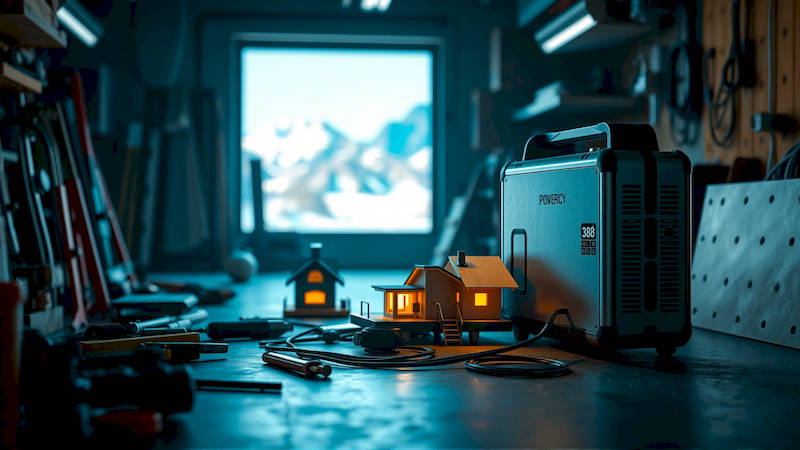
The proliferation of smart home devices – from intelligent thermostats and security systems to voice-activated assistants and automated lighting – has fundamentally reshaped how we interact with our living spaces. However, this increased reliance on connectivity also introduces a new vulnerability: power outages. While many devices boast battery backups, these are often short-lived, designed for temporary bridging rather than sustained operation. This is where portable power solutions, traditionally viewed as emergency backups, are evolving into integral components of a resilient and continuously functioning smart home ecosystem.
The shift isn’t merely about convenience; it's about maintaining critical functions during disruptions, ensuring security remains active, and preserving data integrity. Furthermore, the expansion of outdoor smart devices, like security cameras and smart irrigation systems, situated far from readily accessible power sources, is driving demand for adaptable and scalable portable power integrations. No longer simply a ‘nice-to-have’, the integration of portable power is becoming a necessity for homeowners who aim to fully leverage the benefits of a smart home and safeguard against the increasingly frequent impacts of adverse weather events and grid instability.
This article delves into the strategies, technologies, and practical considerations for seamlessly integrating portable power solutions with your smart home setup, ensuring continued functionality and peace of mind. We will explore the ideal power station choices, the protocols for automated switchover, and the innovative ways users are expanding the capabilities of their connected homes through portable power.
- Understanding Power Needs and Smart Home Device Prioritization
- Choosing the Right Portable Power Station for Smart Home Integration
- Automated Switchover: UPS Functionality and Smart Plugs
- Expanding Outdoor Smart Device Resilience
- Integrating with Home Automation Systems and Monitoring
- Future Trends: V2G and Microgrids
- Conclusion: Empowering Your Smart Home for the Future
Understanding Power Needs and Smart Home Device Prioritization
Before investing in a portable power solution, it’s crucial to assess the power demands of your smart home devices. Not all devices consume the same amount of energy, and understanding this variance is vital for appropriately sizing your power station and maximizing runtime. A simple smart bulb might draw only 5-10 watts, while a Wi-Fi router or a security camera with continuous recording could consume 20-30 watts or more. High-demand devices like refrigerators, even during smart cycles, introduce a significant load, requiring considerably larger power solutions.
Creating a prioritized list of essential devices is a key first step. Consider what must remain operational during an outage. Security systems, communication devices (routers, phones), and medical equipment are often top priorities. Devices like smart TVs, non-essential lighting, and entertainment systems can be considered lower priority and potentially powered down to conserve energy. Furthermore, understanding a device’s ‘surge’ wattage – the momentary peak power draw when it’s initially turned on – is as important as its running wattage. A power station’s inverter needs to be able to handle these surges to prevent tripping or damage.
Tools like power usage monitors (available from companies like Kasa and TP-Link) can help accurately measure the energy consumption of individual devices. "Many users underestimate the draw of even seemingly small devices," notes electronics engineer Amelia Hayes, "especially when multiple devices are running simultaneously. A detailed power audit is the foundation of a successful portable power integration." This level of preparation will prevent the unpleasant surprise of your power station failing to keep critical devices online.
Choosing the Right Portable Power Station for Smart Home Integration
The market for portable power stations has exploded in recent years, presenting a wide range of options with varying capacities, features, and price points. The key specifications to evaluate include battery capacity (measured in Watt-hours – Wh), output wattage, port selection, and charging options. For basic smart home backup, a power station in the 300-600Wh range with 300-600W of continuous output may suffice. However, for a more comprehensive solution supporting a larger number of devices or higher-draw appliances, options ranging from 1000Wh to over 3000Wh are likely necessary.
Beyond capacity and wattage, consider the types of outlets available. Most power stations include AC outlets, USB-A and USB-C ports, and DC outputs. Ensuring compatibility with your smart home devices' charging requirements is essential. Furthermore, features like pass-through charging – the ability to charge the power station while simultaneously powering devices – can significantly enhance usability. Emerging technologies like LiFePO4 (Lithium Iron Phosphate) batteries offer longer lifespans and improved safety compared to traditional lithium-ion batteries, justifying a higher initial investment.
Brands like EcoFlow, Bluetti, and Jackery are leading the market, each offering different strengths. EcoFlow is known for its high capacity and fast charging speeds, Bluetti emphasizes modularity and scalability, and Jackery focuses on portability and affordability. Consider your specific needs and budget when making your selection.
Automated Switchover: UPS Functionality and Smart Plugs
The ideal integration goes beyond simply plugging devices into a portable power station during an outage. Automated switchover systems, leveraging Uninterruptible Power Supply (UPS) functionality, provide a seamless transition to battery power, minimizing downtime and preventing data loss. Some high-end power stations now include built-in UPS capabilities, while others require the use of an external UPS device. These systems constantly monitor the power supply and automatically switch to battery power within milliseconds when an outage occurs.
Smart plugs play a crucial role in this automation. By connecting non-essential devices to smart plugs, you can remotely power them down during an outage to conserve battery life. Advanced smart home platforms like Home Assistant allow you to create automation routines that automatically turn off these devices based on the power station's status. For example, you could set a rule that if the power station is running, and the primary power source is unavailable, all connected smart plugs automatically shut off lights and entertainment systems.
“The integration with smart plugs is a game changer,” explains tech blogger and smart home enthusiast Kevin Stratton, “It turns a static backup system into a dynamic, self-managing power solution. You’re not just reacting to an outage; you're proactively optimizing power consumption.”
Expanding Outdoor Smart Device Resilience
The expansion of smart home technology beyond the walls of the house – encompassing security cameras, smart lighting, and irrigation systems – introduces unique challenges for powering during outages. Running extension cords to outdoor devices is often impractical and potentially unsafe. Solutions include dedicated portable power stations for outdoor use, strategically placed weatherproof enclosures, and even solar charging capabilities.
Solar panels can significantly extend the runtime of your portable power stations, particularly for outdoor devices. Even a small portable solar panel can provide a trickle charge, supplementing the battery throughout the day. Wireless outdoor security cameras often offer battery backup, but integrating them with a portable power station provides a more reliable and sustained solution. This often involves utilizing a power station specifically dedicated to the outdoor device(s) and employing weatherproof cabling to connect the power station to the device.
Wireless connectivity is also crucial. Ensure outdoor devices remain connected to your Wi-Fi network even during an outage – this might require a separate portable Wi-Fi router powered by the same portable power station. Maintaining network connectivity ensures remote access to security footage and control of outdoor devices.
Integrating with Home Automation Systems and Monitoring
True smart home integration goes beyond automated switchover; it involves monitoring the power station's status and incorporating it into your overall home automation ecosystem. Many power stations offer smartphone apps with detailed information on battery level, input/output wattage, and remaining runtime. Integrating this data into platforms like Home Assistant, SmartThings, or Hubitat allows for advanced automation and customized alerts.
You can create alerts that notify you when the power station's battery level reaches a critical threshold, prompting you to replenish its charge. You can also incorporate the power station's status into your smart home dashboards, providing a visual representation of your backup power capabilities. Utilizing APIs (Application Programming Interfaces) provided by some power station manufacturers enables even deeper integration, allowing you to programmatically control and monitor the power station from within your home automation system.
This level of integration not only enhances convenience but also provides valuable insights into your energy consumption and backup power needs, allowing you to optimize your system for maximum performance and reliability.
Future Trends: V2G and Microgrids
The future of portable power integration with smart homes lies in increasingly sophisticated technologies. Vehicle-to-Grid (V2G) technology, while still in its early stages, promises the ability to utilize the batteries in electric vehicles (EVs) as portable power sources for your home. This could provide a virtually unlimited backup power supply, significantly reducing reliance on traditional portable power stations.
The emergence of microgrids – localized energy grids that can operate independently of the main power grid – is another exciting development. Integrated with solar panels, battery storage, and smart inverters, microgrids can provide a highly resilient and sustainable power solution for entire neighborhoods. Portable power stations can serve as a critical component of a microgrid, providing backup power during grid outages and facilitating energy sharing between homes. As these technologies mature, the line between portable power and a fully self-sufficient smart home will continue to blur, offering ever greater energy independence and resilience.
Conclusion: Empowering Your Smart Home for the Future
Integrating portable power solutions with smart home devices is no longer a luxury but a pragmatic step towards building a resilient and connected living space. By carefully assessing your power needs, selecting the right portable power station, and leveraging automation and integration capabilities, you can safeguard your smart home’s functionality during outages and unlock new levels of convenience and control. The initial investment in a robust system can provide invaluable peace of mind, knowing that your security, communication, and essential functions will remain operational when the grid fails.
Key takeaways from this exploration are the importance of thorough power audits, prioritizing essential devices, and embracing automation through smart plugs and home automation systems. Looking ahead, trends like V2G and microgrids promise even more innovative ways to harness portable power and create truly self-sufficient smart homes. Taking the time to plan and implement a well-integrated portable power solution today will prepare your connected home for the challenges and opportunities of the future. Don't wait for the next outage – start empowering your smart home now.
Deja una respuesta