
Building a Smart Home Entertainment System with Multi-Room Audio
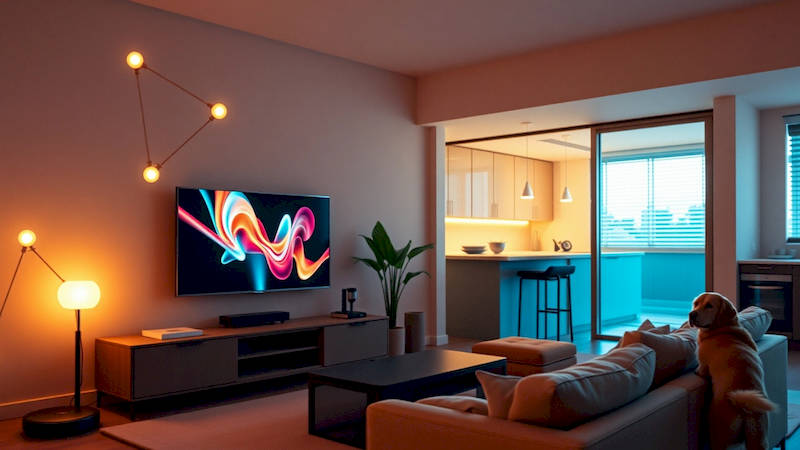
The modern home is evolving. No longer simply a place of residence, it’s becoming a personalized ecosystem – a seamless blend of convenience, security, and entertainment controlled at our fingertips. At the heart of this transformation lies the smart home, and increasingly, the desire for immersive and adaptable audio experiences. While a fantastic home theater is a cornerstone of entertainment, the real power comes from extending high-quality audio throughout the entire house – creating a harmonious soundscape that adapts to different moods, activities, and individual preferences. This article dives deep into building a smart home entertainment system with multi-room audio, providing a comprehensive guide to planning, implementing, and optimizing your own sonic sanctuary. We’ll explore the technologies, the components, and the critical considerations to ensure a seamless and satisfying experience.
The appeal of multi-room audio is straightforward: the ability to listen to different music in different rooms simultaneously, or to play the same track throughout the house with consistent quality. But it goes beyond simple convenience. It's about creating an atmosphere – energizing the kitchen while cooking, setting a relaxing mood in the living room, and providing focused sound for a home office. Recent advancements in wireless technology, coupled with the increasing integration of voice assistants, have made multi-room audio more accessible and powerful than ever before. The proliferation of streaming services also plays a crucial role; the ease of accessing millions of songs instantly significantly enhances the value proposition of a whole-home audio solution.
This isn’t merely about installing speakers; it's about carefully considering your lifestyle, your home’s architecture, and the technology that best suits your needs. Properly executed, a multi-room audio system is an investment that enhances daily life and increases the value of your home. From choosing the right speakers and amplifiers to navigating the intricacies of network connectivity and control systems, this guide will provide you with the knowledge to create a truly exceptional listening experience.
- Understanding the Core Technologies: Wired vs. Wireless
- Choosing Your Components: Speakers, Amplifiers, and Streaming Sources
- Networking and Connectivity: The Backbone of Your System
- Control and Integration: Voice Assistants and Universal Remotes
- Troubleshooting and Optimization: Ensuring a Smooth Experience
- Conclusion: The Future of Home Audio is Here
Understanding the Core Technologies: Wired vs. Wireless
The first critical decision in building a multi-room audio system is choosing between wired and wireless technologies. Traditionally, multi-room audio relied heavily on physical wiring – typically speaker wire running from a central amplifier to each speaker location. While offering unparalleled audio fidelity and reliability, wired systems are more complex and expensive to install, particularly in existing homes. They require running cables through walls, ceilings, and floors, which can be disruptive and costly. However, for the discerning audiophile prioritizing absolute sound quality, especially in dedicated listening rooms, a wired system remains the gold standard.
The rise of wireless technologies, such as Wi-Fi, Bluetooth, and dedicated wireless audio protocols like Sonos' Mesh network, has democratized multi-room audio. Wireless systems are far easier to install, offering flexibility and scalability. Sonos, for example, pioneered the concept of a self-configuring mesh network, where each speaker acts as a repeater, extending the signal’s range and eliminating the need for a central hub in many cases. However, wireless systems sometimes compromise on audio quality due to compression, signal interference, and network congestion. Modern Wi-Fi standards like Wi-Fi 6 and Wi-Fi 6E are improving wireless audio performance, offering increased bandwidth and reduced latency, mitigating some of these concerns.
A hybrid approach is also viable, combining the best of both worlds. You might choose to hardwire speakers in critical listening areas like a home theater, while utilizing wireless speakers in less demanding zones like bedrooms or bathrooms. This allows you to prioritize audio quality where it matters most while enjoying the convenience of wireless connectivity elsewhere. When selecting a technology, carefully weigh the trade-offs between sound quality, cost, installation complexity, and future scalability.
Choosing Your Components: Speakers, Amplifiers, and Streaming Sources
Once you've decided on the overarching technology – wired, wireless, or hybrid – it's time to select the individual components. The speakers are the most visible element of the system and have a significant impact on the overall sound quality. For multi-room audio, in-ceiling and in-wall speakers offer a clean, unobtrusive aesthetic, blending seamlessly into the home’s décor. However, bookshelf or floor-standing speakers can provide superior audio performance, especially for dedicated listening spaces. Consider the room size and acoustics when selecting speaker size and power handling. A larger room requires more powerful speakers to fill the space with sound.
Amplification is equally vital. With wired systems, you'll need a multi-channel amplifier capable of powering all the speakers simultaneously. Look for amplifiers with sufficient wattage per channel to drive your speakers effectively. Wireless systems often have built-in amplification, simplifying the setup process. However, it's crucial to ensure that the speakers and amplifier are appropriately matched to avoid distortion or damage. Don't underestimate the importance of a quality subwoofer, especially for bass-heavy music genres or home theater applications.
The streaming source is the heart of the system, supplying the music content. While some wireless speakers have built-in streaming capabilities, a central streaming device or integration with a voice assistant (like Amazon Echo or Google Home) offers greater flexibility. Streaming services like Spotify, Apple Music, Tidal, and Amazon Music are the primary sources for most users. Consider the services you already subscribe to and ensure compatibility with your chosen multi-room audio system.
Networking and Connectivity: The Backbone of Your System
A robust and reliable network is absolutely critical for a seamless multi-room audio experience. Wireless systems are inherently reliant on a strong Wi-Fi signal, so ensure your router can handle the bandwidth demands of multiple streaming devices simultaneously. Consider upgrading to a mesh Wi-Fi system if you have a large home or experience signal dead zones. Mesh systems create a network of interconnected nodes that provide consistent coverage throughout your property.
Proper network configuration is also key. Ensure your router is set to assign static IP addresses to your streaming devices and speakers, preventing connectivity issues caused by DHCP lease expiration. Also, consider creating a separate guest network for visiting devices to prevent them from interfering with your audio stream. For wired systems, ensure the speaker wire is of sufficient gauge to minimize signal loss. CAT5e or CAT6 cabling is recommended for connecting components to a central network switch.
Furthermore, many multi-room audio systems support both 2.4 GHz and 5 GHz Wi-Fi bands. The 5 GHz band offers faster speeds and less interference, but has a shorter range. Experiment with both bands to determine which provides the most reliable connection in each room. According to a recent study by Parks Associates, over 60% of households experience connectivity issues with their smart home devices, highlighting the importance of a well-configured network.
Control and Integration: Voice Assistants and Universal Remotes
Once your system is set up, you'll need a way to control it. Voice assistants, such as Amazon Alexa, Google Assistant, and Apple Siri, offer hands-free control of your multi-room audio system. You can simply ask Alexa to play music in the kitchen, or tell Google to group all the speakers together for synchronized playback. Voice assistant integration provides a convenient and intuitive user experience.
Universal remotes, like those offered by Logitech Harmony, provide a centralized control interface for all your home entertainment devices, including your multi-room audio system. These remotes can be programmed to control volume, source selection, and power on/off functions. For more advanced control, consider a dedicated home automation system, such as Control4 or Crestron, which allows you to create custom scenes and automate various aspects of your audio experience.
Integration with other smart home devices is also important. For example, you could create a scene that automatically lowers the lights and starts playing relaxing music when you say “Movie Night.” The ability to seamlessly integrate your multi-room audio system with other smart home devices enhances the overall convenience and enjoyment of your smart home ecosystem.
Troubleshooting and Optimization: Ensuring a Smooth Experience
Even with careful planning and installation, you may encounter occasional issues. Common problems include connectivity issues, audio dropouts, and synchronization errors. The first step in troubleshooting is to check your network connection. Ensure your router is functioning properly and that all devices are connected to the network. Restarting your router and speakers can often resolve temporary glitches.
If you’re experiencing audio dropouts, try moving your speakers closer to your router or adding a Wi-Fi extender to improve signal strength. Synchronization errors, where speakers play slightly out of sync, can be caused by network latency. Reducing the number of devices on your network or upgrading to a faster network can help resolve this issue. Regularly updating the firmware of your speakers and streaming devices is also crucial for maintaining optimal performance.
Finally, don’t be afraid to experiment with speaker placement. Small adjustments to speaker position can significantly improve the sound quality. Reflectors, absorbers, and diffusers can be used to mitigate room acoustics issues. A professional audio calibration service can also help optimize your system for your specific room and listening preferences.
Conclusion: The Future of Home Audio is Here
Building a smart home entertainment system with multi-room audio is a powerful way to elevate your home environment. From the convenience of voice control to the immersive experience of synchronized music playback, the benefits are undeniable. The key to success lies in careful planning, selecting the right components, and ensuring a robust network infrastructure. While the initial investment may seem substantial, the long-term enjoyment and enhanced lifestyle it provides are well worth the cost.
Remember to prioritize your needs and preferences. Don’t be afraid to start small and expand your system over time. As technology continues to evolve, new and innovative multi-room audio solutions will emerge, offering even greater flexibility, performance, and integration with your smart home ecosystem. The future of home audio is here, and it's resonating throughout every room in the house.
Deja una respuesta